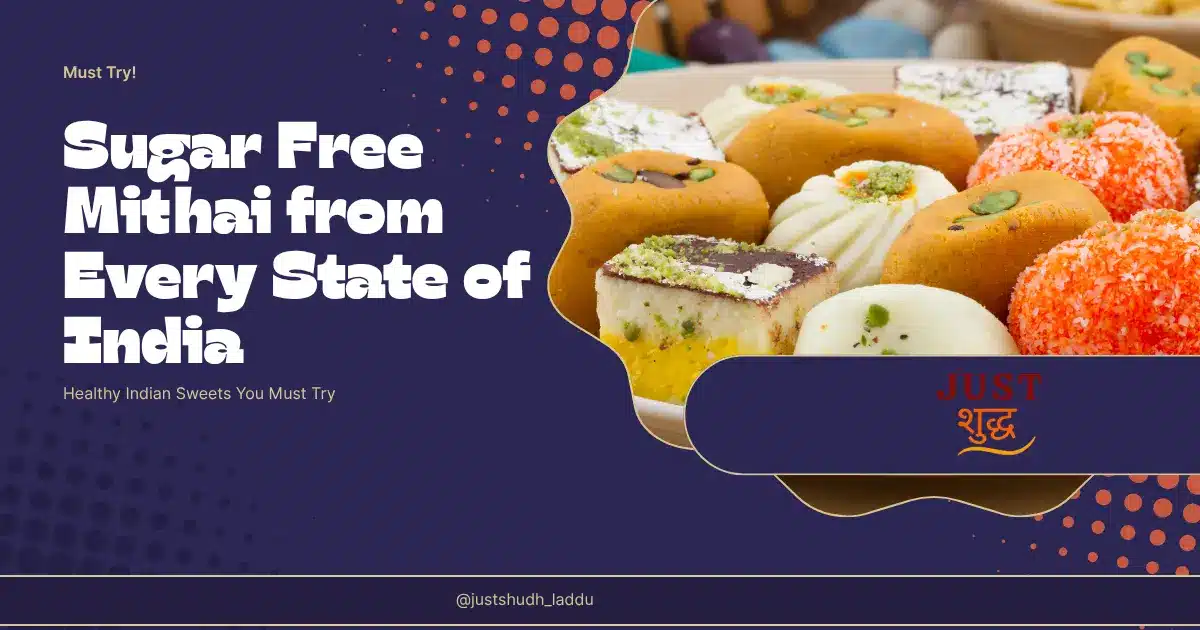
India runs on celebrations — and celebrations run on mithai. But most traditional Indian sweets are packed with refined sugar, maida, and vanaspati that spike your blood sugar and leave you feeling guilty the moment the festival ends.
The good news? Every Indian state has beloved traditional sweets that can be made completely sugar free — without losing the flavor, texture, or joy. And the secret ingredient that makes it possible every single time is the same: natural, whole-food ingredients like seeds, dry fruits, makhana, and jaggery.
This guide covers sugar free mithai from every major region of India — with practical tips on how to make them at home using ingredients you can trust.
Why Sugar Free Mithai Is the Smarter Choice
Refined white sugar is added to Indian sweets in enormous quantities — often 40 to 60 percent of the total recipe by weight. That is a massive glycemic hit in every bite. Here is what happens when you switch to sugar free mithai made with natural ingredients:
- Blood sugar stays stable — no spikes, no crashes, no energy slumps after eating
- You actually feel satisfied instead of craving more sweets within the hour
- Natural sweeteners like dates, jaggery, and coconut sugar come with minerals, fiber, and antioxidants
- Adding seeds and makhana to your mithai recipe turns a guilty indulgence into genuinely nourishing food
The shift is not complicated. It starts with choosing better ingredients.
North India
Uttar Pradesh — Sugar Free Besan Ladoo
Besan ladoo is one of the most loved sweets across India. Traditionally made with chickpea flour, ghee, and refined sugar, the healthy version replaces white sugar with organic jaggery or date paste. Roasted besan has a deep, nutty flavor that pairs naturally with the caramel warmth of jaggery — you will not miss the refined sugar at all.
Make it healthier: Add a tablespoon of roasted mixed seeds (flax, pumpkin, sunflower, watermelon) to the besan while roasting. The seeds add a pleasant crunch, boost the protein and omega-3 content, and bind the ladoo better with less ghee needed.
Punjab — Sugar Free Pinni
Pinni is Punjab’s traditional winter sweet — whole wheat flour, ghee, dry fruits, and sugar pressed into rich, satisfying balls. Remove the refined sugar and replace it with date paste or jaggery, and Pinni actually tastes better because the bold flavors of the nuts and ghee come through more clearly.
Make it healthier: Flax seeds are a traditional Punjabi ingredient and a natural fit in Pinni. Add two tablespoons of roasted flax seeds per batch — they add a nutty depth of flavor, loads of omega-3 fatty acids, and help the Pinni hold its shape without extra ghee.
Best for Besan Ladoo & Pinni
JustShudh Mix Seeds — 5 Super Seeds
Pumpkin, watermelon, sunflower, flax & chia — add a spoonful to any ladoo recipe for protein, omega-3 & fiber.
Rajasthan — Sugar Free Ghevar
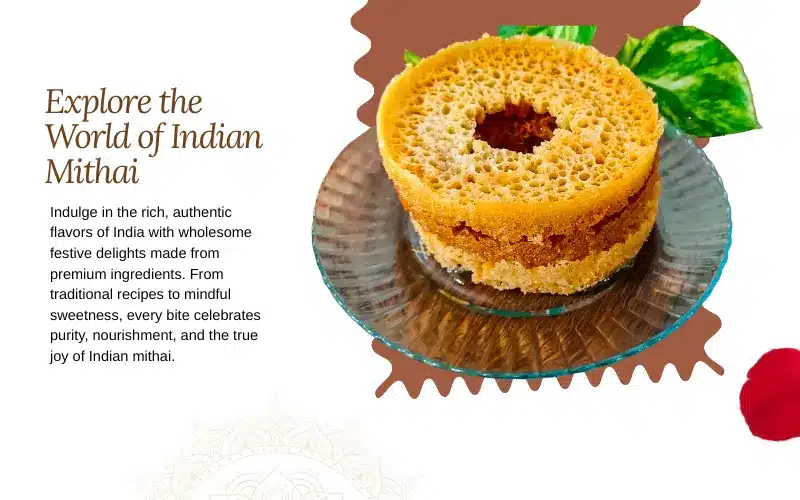
Ghevar is Rajasthan’s iconic disc-shaped sweet, traditionally drenched in sugar syrup. The sugar free version uses a light stevia-based syrup or very diluted jaggery syrup. The crispy wheat and ghee base of Ghevar is so rich on its own that the syrup is only needed for moisture and binding — not sweetness.
Make it healthier: Use whole wheat flour instead of maida for the base, and finish with a light jaggery syrup instead of the traditional white sugar syrup. Top with crushed roasted makhana instead of silver varq for a protein-rich garnish that adds a beautiful crunch.
High Protein Mithai Garnish
JustShudh Roasted Makhana Combo Pack
Powder it for sugar free barfi & ladoo base — or use whole as a crunchy topping on any mithai. High protein, low calorie.
Delhi — Sugar Free Sohan Halwa
Delhi’s Sohan Halwa is dense, rich, and deeply satisfying — made with wheat, ghee, and sugar. Replace white sugar with organic jaggery and the halwa gains an earthy, complex flavor that is actually more interesting than the original.
Make it healthier: Stir in a generous handful of pumpkin seeds and mixed seeds before setting — they add texture, protein, and healthy fats that turn Sohan Halwa from a pure sugar hit into a genuinely nourishing sweet.
South India
Tamil Nadu — Sugar Free Mysore Pak
Mysore Pak is one of India’s most iconic sweets — besan, ghee, and sugar cooked to a melt-in-the-mouth fudge. It also has one of the highest sugar concentrations of any Indian mithai. The sugar free version uses stevia or monk fruit sweetener, both of which dissolve cleanly and give Mysore Pak its characteristic smooth texture without the glycemic load.
Make it healthier: The ghee and besan base already provides so much richness that you need far less sweetener than you think. Use stevia and add roasted sesame seeds on top — sesame is traditional in South Indian sweets and adds calcium, healthy fats, and a beautiful nutty flavor.
Kerala — Sugar Free Unniyappam
Unniyappam is one of Kerala’s most beloved temple sweets — small round fried balls made with rice flour, ripe banana, and jaggery. Here is the beautiful reality: traditional Unniyappam already uses jaggery. It is naturally a lower glycemic sweet without any modification needed.
Make it healthier: Use very ripe bananas to maximize natural sweetness and reduce jaggery further. Add a tablespoon of chia seeds to the batter — they absorb moisture, add fiber, and are completely undetectable in the finished sweet.
Karnataka — Sugar Free Obbattu (Holige / Puran Poli)
Obbattu is Karnataka’s beloved festive flatbread stuffed with a chana dal and jaggery filling. Since jaggery is the traditional sweetener, Obbattu is already significantly healthier than most North Indian mithai. The chana dal filling provides protein and fiber, making this one of the most nutritionally complete Indian sweets.
Make it healthier: Use whole wheat flour for the outer layer. Add powdered flax seeds to the chana dal filling — the earthy, slightly nutty flavor blends seamlessly with jaggery and cardamom.
Andhra Pradesh — Sugar Free Pootharekulu
Pootharekulu is one of India’s most unique sweets — thin edible rice paper filled with jaggery and dry fruit powder. Traditional Pootharekulu is already made with jaggery, which means it is naturally a low-glycemic mithai. The filling is simple: jaggery powder, roasted dry fruits, and sometimes poppy seeds.
Make it healthier: Add mixed seed powder (lightly roasted and ground) to the filling. It blends invisibly into the dry fruit powder and doubles the nutritional value of each piece.
East India
West Bengal — Sugar Free Sandesh
Sandesh is the crown jewel of Bengali mithai — fresh chenna shaped into beautiful forms and flavored with cardamom or rose water. It is also one of the easiest Indian sweets to make completely sugar free because chenna itself is mildly sweet and incredibly rich. Replace white sugar with stevia or smooth date paste and the result is a high-protein, genuinely healthy sweet.
Make it healthier: Stevia gives the cleanest neutral sweetness for Sandesh. Add a sprinkle of roasted mixed seeds on top as a garnish — it looks beautiful and adds a satisfying crunch to the smooth chenna.
Odisha — Sugar Free Rasagola
Traditional Rasagola is chenna balls soaked in thin sugar syrup. The sugar free version uses a light stevia syrup or mildly sweetened coconut water base. The chenna itself carries most of the flavor — it is protein-rich, soft, and naturally satisfying without needing a heavy sugar syrup.
Make it healthier: A light stevia-based syrup flavored with cardamom and a few saffron strands is all you need. The result is a high-protein, low-sugar sweet that is genuinely good for you.
Bihar — Sugar Free Thekua
Thekua is Bihar’s sacred Chhath Puja sweet — whole wheat flour, jaggery, and ghee pressed into beautiful embossed discs. Like many sweets from eastern India, Thekua is traditionally made with jaggery, making it already far healthier than most Indian mithai. The whole wheat base adds fiber, and jaggery provides iron and minerals.
Make it healthier: Already excellent as-is. Use cold-pressed coconut oil instead of refined oil and add roasted flax seeds to the dough for additional omega-3 content.
West India
Maharashtra — Sugar Free Modak
Modak is Lord Ganesha’s favorite sweet and one of India’s most naturally healthy mithai. The steamed version — rice flour dumplings stuffed with fresh coconut and jaggery — is already made without refined sugar. Fresh coconut provides healthy medium-chain triglycerides, jaggery provides minerals, and steamed rice flour is easy to digest.
Make it healthier: Reduce jaggery by 25 percent and compensate with freshly grated coconut, which adds natural sweetness from its own sugars. Add a teaspoon of sesame seeds to the coconut filling for extra calcium and flavor.
Gujarat — Sugar Free Mohanthal
Mohanthal is Gujarat’s rich besan fudge — ghee, milk, besan, and sugar cooked to a dense, slightly grainy texture that is deeply satisfying. Replace white sugar with dates or jaggery and Mohanthal’s roasted besan flavor becomes even more prominent and enjoyable.
Make it healthier: Date paste works beautifully here — it adds moisture that helps Mohanthal set firmly without needing as much ghee. Top with roasted pumpkin seeds and mixed seeds instead of silver varq for a crunchy, protein-rich finish.
Goa — Sugar Free Dodol
Dodol is Goa’s dense, chewy festive sweet made with coconut milk, rice flour, and jaggery. Like many coastal Indian sweets, Dodol already uses jaggery traditionally — making it a naturally lower glycemic sweet. The coconut milk base provides healthy fats, and rice flour gives it its characteristic chewy texture.
Make it healthier: Use good quality unrefined coconut jaggery for the deepest flavor. Dodol needs no further modification — it is one of India’s most naturally wholesome sweets.
Madhya Pradesh — Sugar Free Mawa Bati
Mawa Bati is MP’s rich fried sweet made with khoya, dry fruits, and sugar. In the sugar free version, date paste is mixed directly into the khoya dough — khoya itself has a natural milky sweetness from lactose, so very little additional sweetener is needed. The dry fruit stuffing provides its own natural sweetness.
Make it healthier: Stuff with a mixture of chopped dry fruits and roasted mixed seeds — the combination of crunchy seeds and chewy dry fruits inside soft fried khoya is genuinely better than the original sugar-laden version.
Northeast India
Assam — Sugar Free Til Pitha
Til Pitha is Assam’s beloved Bihu sweet — rice flour rolls filled with sesame seeds and jaggery. Sesame seeds are extraordinarily nutritious: rich in calcium, iron, zinc, and healthy fats. Combined with jaggery and rice flour, Til Pitha is already one of India’s most naturally nutritious sweets.
Make it healthier: Already made with jaggery. Use black sesame seeds for additional antioxidant benefit. Our roasted sesame seeds are the perfect base for this recipe — lightly toasted, aromatic, and ready to use.
Perfect for Til Pitha & Modak
JustShudh White Sesame Seeds (Til)
Rich in calcium & healthy fats. Roasted & ready to use — traditional in South Indian and northeastern mithai recipes.
Manipur — Sugar Free Chak-Hao Kheer
Chak-Hao Kheer is a stunning purple rice pudding made with Manipur’s prized black rice, milk, and sugar. Black rice is loaded with anthocyanins — the same powerful antioxidants found in blueberries — making this one of the most nutrient-dense Indian sweets in existence. Replace white sugar with stevia or coconut sugar and you have a genuinely superfood dessert.
Make it healthier: The natural nuttiness of black rice means it needs very little sweetener. Use stevia and top with a handful of mixed seeds for added protein and crunch.
The Ingredients That Make Sugar Free Mithai Possible
The best sugar free mithai recipes share a common thread: they replace empty calories with ingredients that actually nourish you. At JustShudh, these are the natural superfoods we use and recommend for homemade sugar free mithai:
Mix Seeds — Our premium blend of flax, pumpkin, sunflower, and watermelon seeds is the single most versatile ingredient for healthy mithai. Add to any ladoo, barfi, or halwa recipe for protein, omega-3, and fiber without changing the flavor.
Roasted Makhana — Powder it and use as a base for barfi and ladoos. High in protein, low in calories, and naturally mild in flavor so it takes on any sweetener beautifully. Whole roasted makhana also works as a crunchy garnish on any mithai.
Flax Seeds — Ground flax seeds bind ladoos and barfi without needing extra ghee. Nutty flavor, excellent source of omega-3 fatty acids. Works particularly well in Pinni, Thekua, and any wheat-based sweet.
Chia Seeds — Add to batter-based sweets like Unniyappam or kheer. Absorb moisture and add fiber and omega-3 without any detectable flavor change.
Pumpkin Seeds — Rich in magnesium and zinc. Perfect as a garnish on halwa, Mohanthal, and Sohan Halwa. Also works well pressed into the top of set barfi.
Sesame Seeds — Already traditional in South Indian and northeastern sweets. Rich in calcium and healthy fats. Use in Til Pitha, Mysore Pak garnish, and Modak filling.
How to Sweeten Mithai Without Refined Sugar
Medjool Dates: Soak and blend into a smooth paste. Use 1:1 in place of sugar in ladoo, halwa, and barfi recipes. Provides fiber, potassium, and natural fructose that digests more slowly than refined sugar.
Organic Jaggery: India’s most traditional sweetener. Use 75 percent of the sugar quantity called for — jaggery is slightly sweeter and contains iron, magnesium, and potassium.
Coconut Sugar: Glycemic index of 35 versus white sugar’s 65. Mild caramel flavor. Works in kheer, halwa, and barfi.
Stevia: Zero calories, zero glycemic impact. Best for Sandesh, Rasagola syrup, and kheer where a clean neutral sweetness is needed.
Ripe Bananas: Natural sweetener for batter-based sweets like Malpua and Unniyappam. One ripe banana replaces several tablespoons of sugar.
Ready-made Sugar Free Mithai
Nature’s Seed Laddu — Handcrafted & Sugar Free
Flax, pumpkin, sunflower & sesame seeds with dates & desi ghee. No refined sugar. Rated 5★ by customers.
Frequently Asked Questions
Which JustShudh products work best for making sugar free mithai at home?
Mix Seeds and Roasted Makhana are the two most versatile options. Mix Seeds can be added to almost any ladoo or barfi recipe for extra nutrition. Makhana can be powdered and used as a base for sugar free barfi, or kept whole as a garnish. Flax Seeds and Sesame Seeds work excellently in specific regional recipes like Pinni, Til Pitha, and Obbattu.
Is jaggery actually sugar free?
Jaggery is not technically sugar free — it contains natural sugars. However, it is unrefined and retains minerals and fiber that slow sugar absorption. Its glycemic index is significantly lower than white sugar, making it a much healthier choice. For strict diabetics, consult a doctor before consuming jaggery.
Which Indian sweets are naturally low in sugar?
Sandesh, Til Pitha, Unniyappam, Modak (steamed), Obbattu, Pootharekulu, and Thekua are traditionally made with jaggery and are naturally lower in glycemic impact than most Indian mithai.
Can diabetics eat sugar free mithai made with seeds and makhana?
Sugar free mithai made with stevia or monk fruit sweetener and a seed or makhana base is generally suitable for diabetics in moderation — the high protein, fiber, and healthy fat content helps slow any glucose release. However, always consult your doctor for personalized advice.
How do seeds and makhana improve homemade mithai?
Seeds add protein, healthy fats, and fiber that slow digestion and keep you full longer. Makhana is low in calories and high in protein. Both reduce the overall glycemic impact of the sweet while adding genuine nutritional value — and in most recipes they improve the texture too.
What is the easiest sugar free mithai to make at home?
Besan Ladoo with jaggery and mixed seeds is the easiest starting point — simple ingredients, forgiving recipe, and the result is genuinely delicious. Sandesh with stevia is another excellent beginner recipe that requires no cooking skill and comes together in under 20 minutes.
Start Making Healthier Mithai Today
India’s original sweet-making tradition did not rely on refined white sugar — jaggery, dates, coconut, and honey were the real sweeteners for thousands of years. Sugar free mithai is not a modern health trend. It is a return to how Indian sweets were actually made.
Every recipe on this page becomes dramatically more nutritious the moment you add seeds, makhana, or dry fruits as part of the base — not just as decoration. The flavor improves. The texture improves. And you can eat your mithai without the guilt.
Explore JustShudh‘s range of premium natural seeds and roasted makhana — the ingredients that make genuinely healthy Indian sweets possible.